The short answer
Media buyers know how to plan a search campaign and a paid social flight. Buying inside AI conversations asks for the same discipline with different inputs: there are no keywords to bid on and no cookie audiences to build. This guide explains AI media buying step by step for agency teams: how to brief a campaign, how targeting works, how bidding and approval fit in, and what to check before spend goes live. It is part of our wider guide to AI advertising for agencies.
What Is AI Media Buying?
AI media buying is the planning, purchasing and optimization of ad placements inside AI assistants, chatbots and AI-powered apps. The buyer chooses markets, budgets and creative, and the platform matches ads to conversations by topic and intent. Every placement should be clearly labeled as sponsored, and sensitive conversations should be excluded.
Two things set it apart from familiar channels. The unit of context is a live conversation, not a page or a profile. And supply is fragmented: assistants from large AI companies sit beside thousands of independent AI apps. Platforms that aggregate those surfaces, as Thrad does, save buyers from negotiating with each one.
How AI Media Buying Differs From Search and Social
| Step | Search / social buying | AI media buying |
|---|---|---|
| Targeting inputs | Keywords, audiences, interests | Conversation topics, intent, context hints |
| Creative | Headlines, images, video | Short, specific sponsored units that answer the question being asked |
| Bidding | CPC or CPM auctions | CPC or CPM, with bid ceilings set by the buyer |
| Brand safety | Placement and keyword exclusions | Topic exclusions plus platform-level sensitive-conversation rules |
| Measurement | Platform pixels, analytics | Conversion pixel plus tests; clicks alone are not enough |
Scroll to compare all columns
A Five-Step AI Media Buying Workflow
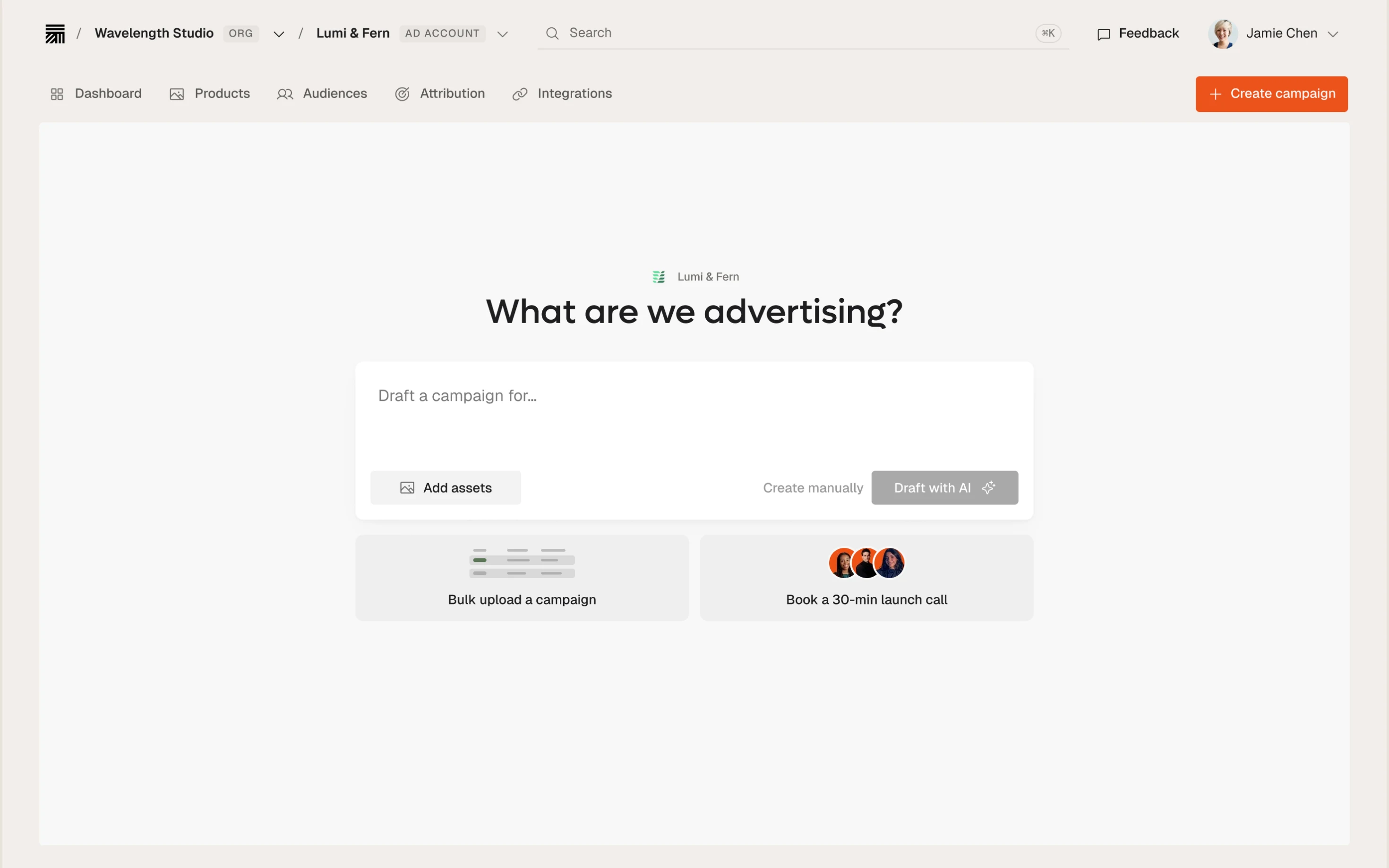
- 1. Brief. Define the product, the customer question it answers, the markets and the outcome that matters. Platforms may draft campaigns from a URL or product feed, but the strategic brief stays with the agency.
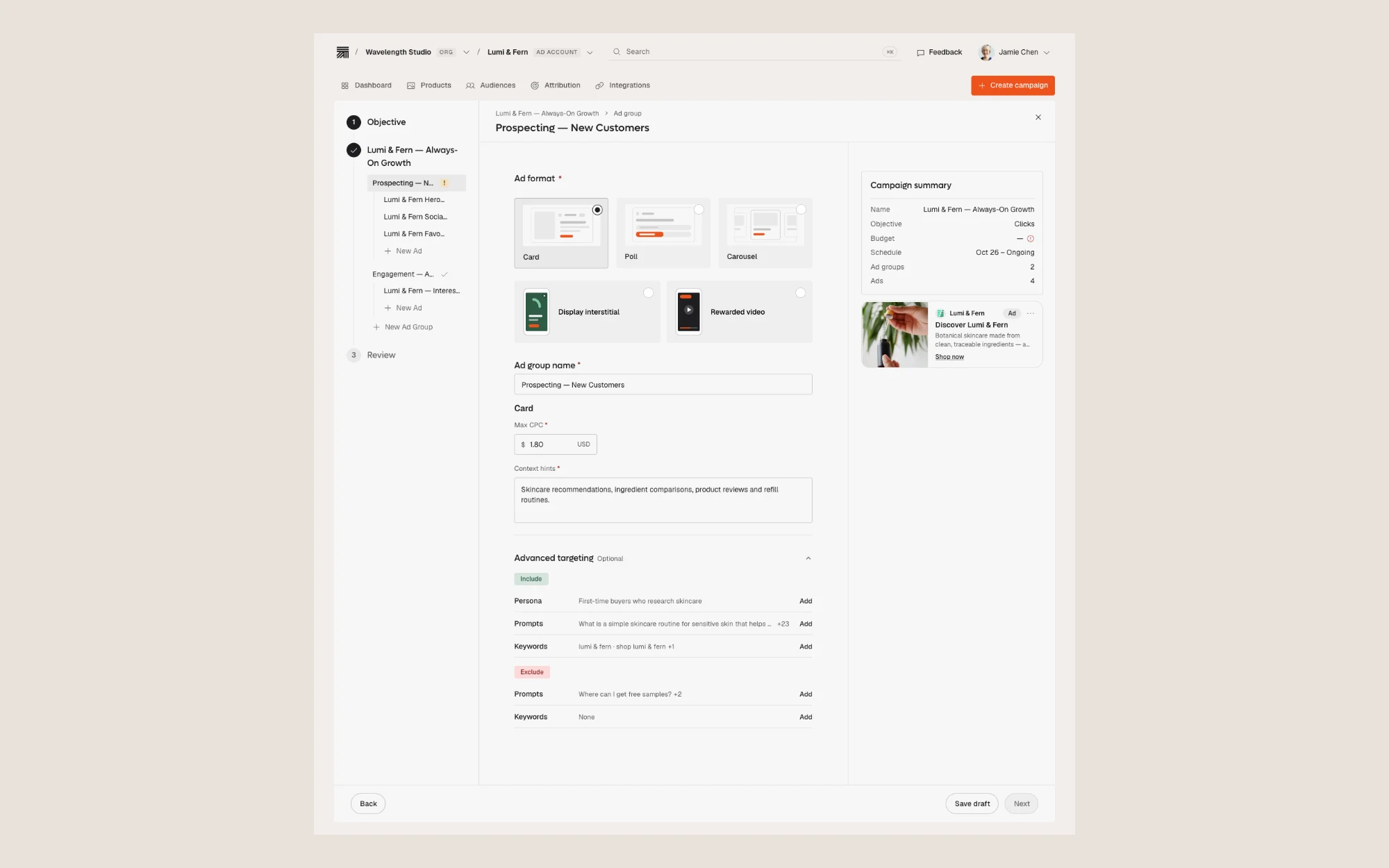
- 2. Target by context. Write the conversation topics where the client belongs, and the ones to avoid. Add context hints and negative keywords where the platform allows them.
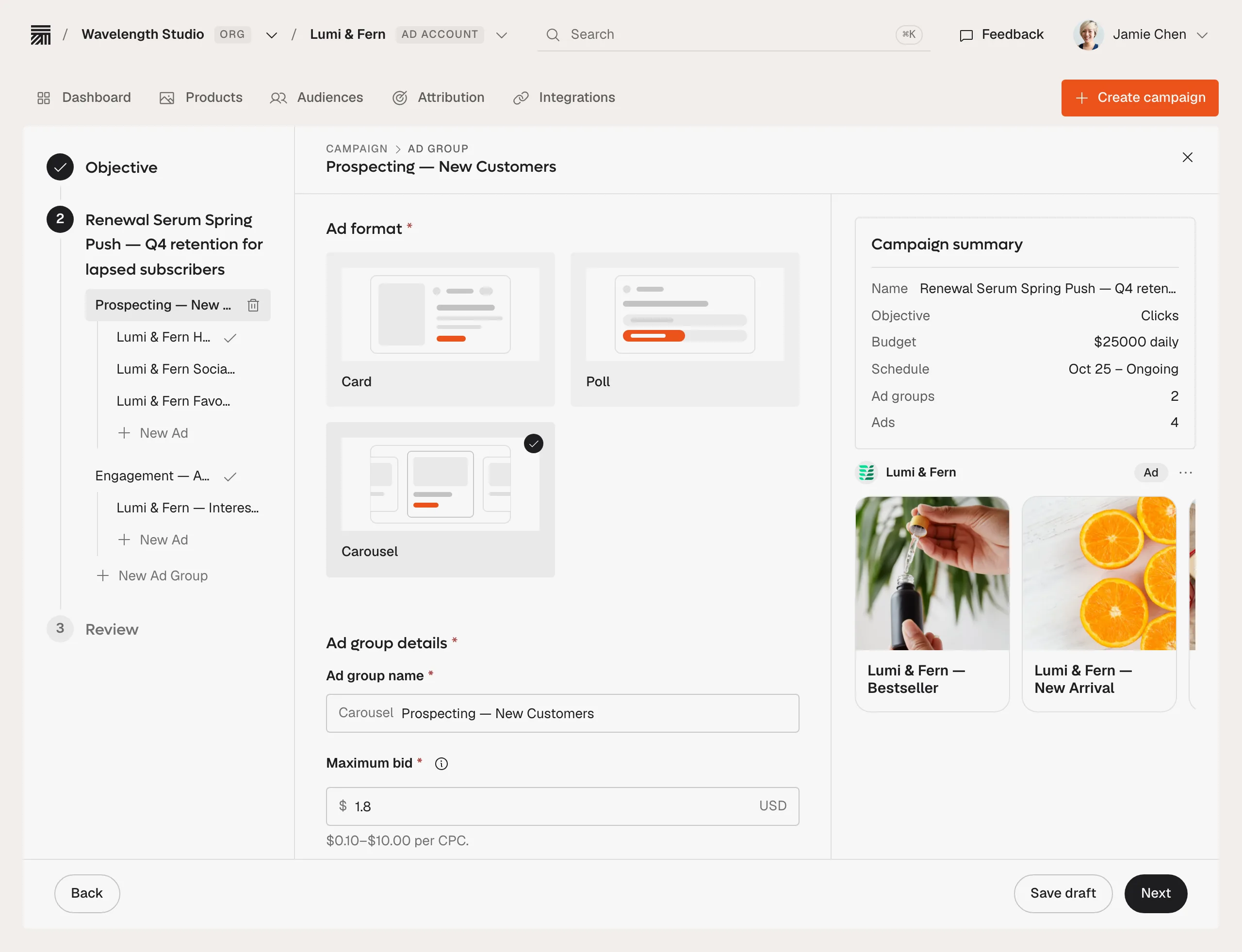
- 3. Set the controls. Budget, schedule, bid ceiling, markets, languages and devices. Decide the daily pace and the point at which spend pauses.
- 4. Approve before launch. Review ad copy, formats and landing pages. Nothing should go live without client sign-off.
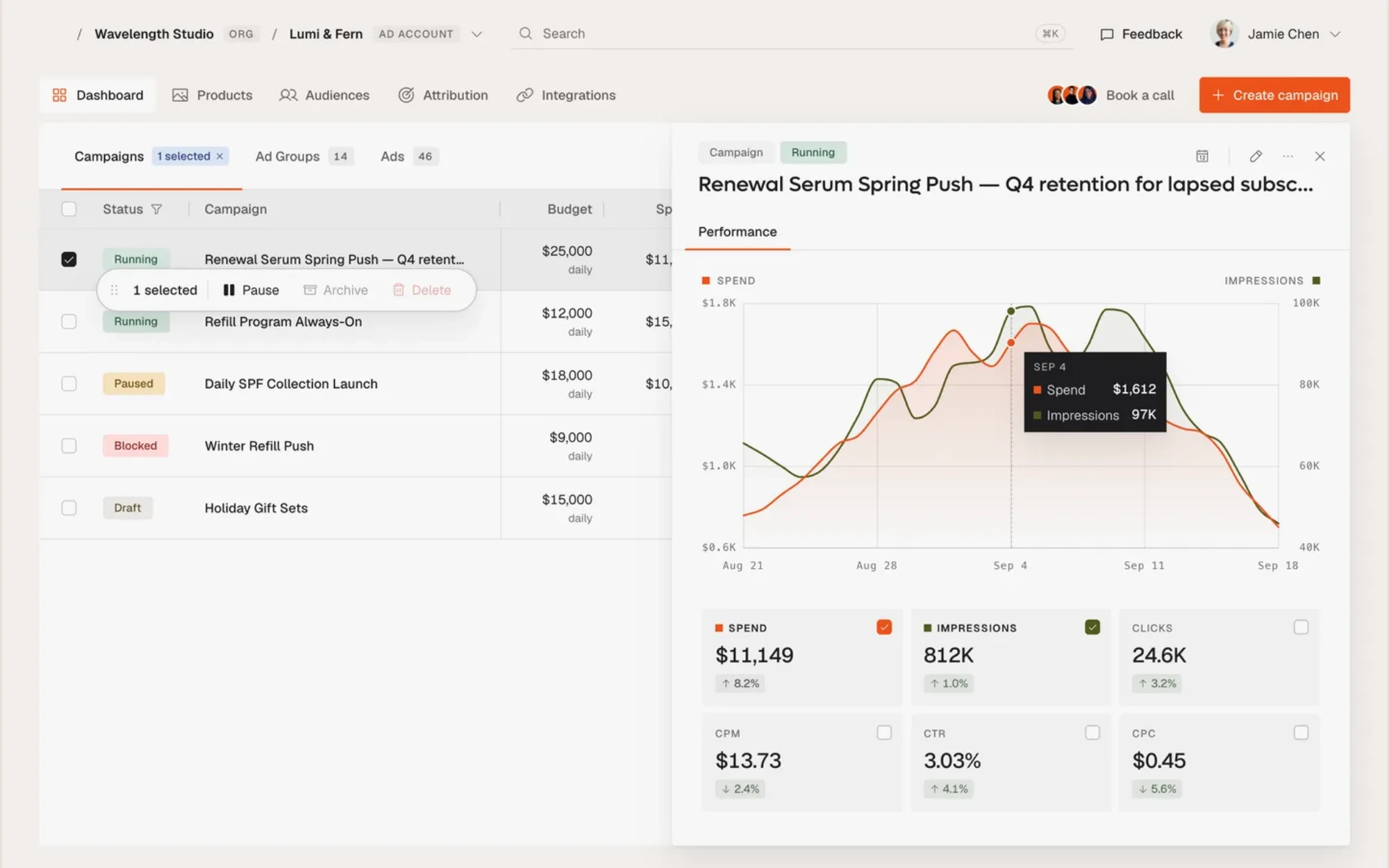
- 5. Optimize. Shift budget toward the conversations that produce outcomes, and retire topics that drift off brief.
Thrad's Autopilot describes this flow: it drafts a campaign from a URL or product feed, requires approval before anything runs, and paces spend within the limits the buyer sets.
Planning an AI Media Buying Budget
Start with a test budget, not a share of an annual plan. Benchmarks for this channel are thin, so treat the first flight as a question to answer. Decide what the test should prove, such as whether a category's high-intent questions produce conversions at an acceptable cost. Then set the budget at the smallest level that gives a readable result. Thrad's self-serve option has no minimum spend, and its managed service starts at $10k a month, so agencies can choose the level of support that fits.
Writing Creative for AI Media Buying
Creative is where AI media buying differs most from habits built on banners and search. An ad inside a conversation competes with an answer the person wants to read, so it has to earn its place in a few words. Start from the question. If people ask which tool suits a ten-person team, the ad should speak to a ten-person team. State one benefit and one next step. Avoid slogans that could appear anywhere.
Write several versions for each conversation theme, and test them one variable at a time: the headline, the offer, or the call to action. Keep the label obvious and never imitate the assistant's voice. Creative that looks like an answer can mislead, and it erodes trust in the whole channel.
Reviewing Placements as Part of AI Media Buying
Dashboards show totals. They do not show whether an ad made sense next to a particular conversation. Build a habit of reading real placements each week, even if only a sample. Ask three questions of each: did the topic match the brief, was the timing sensible, and would you be comfortable showing it to the client? Patterns in the answers tell you where to add exclusions or change targeting, which is the buyer's equivalent of checking the sites a display campaign ran on.
AI Media Buying Mistakes to Avoid
- Buying broad topics because they seem safe. Broad targeting wastes budget on weak matches.
- Using banner-style creative that ignores the question being asked.
- Judging results on click-through rate alone.
- Skipping exclusions for sensitive topics. Ask for them in writing; see Thrad's safety standards.
- Running one message across every surface without checking how each presents ads.
Questions to Ask a Platform Before You Buy
- Which AI surfaces and apps does the platform reach, and how is that inventory described?
- How are ads matched to conversations, and what can I control?
- How does pricing work, and is there a minimum spend?
- What conversion tracking is available, and how are results reported?
- How are sponsored placements labeled, and which conversations are excluded?
- What support do agencies receive during setup and after launch?
The answers will tell you whether the platform is built for agency workflows or only for single advertisers. Look for multi-client support, approval steps and reporting you can share, because they decide how much manual work each client adds.
Add AI conversations to your media plan
Explore the buying options for client campaigns and the questions to settle before a test.
See Thrad for agenciesHow AI Media Buying Relates to Your Existing Process
Most of an agency's existing skills carry over: audience understanding, creative briefs, test design and reporting. What changes is the planning unit. Instead of "which audience on which publisher," ask "which situation, in which kind of conversation." Thrad's page on media buying covers the buying options in more detail, and our guide to measuring AI assistant ad performance honestly covers results.
Ready to try it? Our AI advertising pilot playbook lays out a six-week test, and our pillar guide to AI advertising for agencies shows how the platform supports multi-client work.